

[For medical professionals, health-science learners, and informed readers interested in evidence-based medicine]
Scholarly Identification
Scholarly synthesis underpinning this work is archived in a public research repository (Zenodo), linked to the author’s persistent ORCID record, and indexed within OpenAIRE, supporting formal attribution, discoverability, and long-term accessibility across academic indexing systems.
Scholarly Profiles:
DOI: https://doi.org/10.5281/zenodo.18708554
ORCID: https://orcid.org/0009-0005-3523-774X↗
Introduction: Why Early Parkinsons Disease Detection Matters
Early Parkinsons detection is becoming possible thanks to advanced infrared biomarker technology. Misfolded α-synuclein proteins can now be detected with high precision using immuno-infrared sensors (iRS), enabling proactive diagnosis before motor symptoms appear. These breakthroughs in early Parkinson’s detection are transforming how clinicians approach treatment and monitoring.
Early Parkinsons detection is crucial but often delayed due to vague initial symptoms. Now, advanced biosensor technology is changing the landscape.
Researchers have zeroed in on a key biomarker—misfolded alpha$-synuclein protein found in cerebrospinal fluid (CSF) to detect PD before severe brain damage occurs. This blog reviews 3 major breakthroughs using infrared technology to detect these early protein changes, revolutionizing early Parkinsons detection.
1. Alpha-Synuclein as the Foundation for Early Parkinsons Detection
The accumulation of misfolded α-synuclein in neurons is a pathological hallmark of Parkinson’s disease (PD). Using cerebrospinal fluid (CSF) as a diagnostic window, scientists can now identify molecular changes linked to neurodegeneration with precision.
The immuno-infrared sensor (iRS) distinguishes between healthy and misfolded α-synuclein structures by analyzing their molecular vibration signatures—a groundbreaking advancement in early Parkinsons detection.
2. How Infrared Biomarker Improves Early Parkinsons Detection
The iRS platform binds α-synuclein with specific antibodies and measures its infrared light absorption pattern. This identifies structural shifts with remarkable precision, setting a new standard for early Parkinson’s detection.The iRS platform binds α-synuclein with targeted antibodies and measures its infrared light absorption pattern to reveal subtle structural abnormalities.
This allows for high-precision structural identification, setting a new standard in early Parkinsons detection and diagnostic accuracy.
Key Benefits of Early Parkinsons Detection Using Infrared Technology
- Detects Parkinso’s before motor symptoms appear.
- Requires only microliters of CSF, ensuring a minimally invasive process.
- Non-radioactive, highly sensitive, and clinically adaptable.
3. How Infrared Biomarkers Improve Early Parkinsons Detection
Clinical studies demonstrate that iRS analysis identifies early Parkinson’s in 85–90% of pre-symptomatic individuals. Research efforts are now expanding toward blood-based infrared biomarkers, potentially broadening accessibility.
Future applications may include:
Monitoring disease progression and treatment response, enabling more personalized healthcare.Clinical studies show that iRS analysis correctly identifies early Parkinson’s in 85–90% of pre-symptomatic individuals. This precision could soon be extended to blood-based biomarkers.
- Blood-based screening for early Parkinson’s detection in the general population.
2. Risk stratification for genetically predisposed individuals.
4. Clinical Relevance and Future Applications of Early Parkinsons Detection
Clinical studies demonstrate that iRS analysis identifies early Parkinson’s in 85–90% of pre-symptomatic individuals. Future applications may include blood-based screening, risk stratification in genetically predisposed patients, and monitoring treatment response.
5. Reimagining the Parkinson’s Diagnosis Timeline Through Early Detection
These breakthroughs in early Parkinsons detection using infrared biomarker technology are redefining diagnosis. Proactive identification of α-synuclein misfolding allows interventions before motor symptoms emerge, offering a non-invasive, life-changing route.
Conclusion: “These breakthroughs in early Parkinsons detection allow clinicians to identify α-synuclein misfolding before motor symptoms emerge.”
These three breakthroughs In Early Parkinson’s Diagnosis using infrared biomarker technology are reshaping the diagnostic timeline. Instead of waiting for tremors or motor symptoms, infrared-based biomarkers offer a proactive, accurate, and non-invasive diagnostic pathway.
Want to understand the science, technology, and clinical data behind this diagnostic revolution in depth?
Read my full “detailed insights”analysis on space bacteria here.
Related Reading.
• Early Parkinson’s Detection Using Alpha-Synuclein Biomarkers
• Molecular Pathology of Neurodegenerative Disorders
• Cerebrospinal Fluid Biomarkers in Neurology • Advances in Neurodegenerative Disease Diagnostics
Further Reading
National Institute of Neurological Disorders and Stroke (NINDS) — Parkinson’s Disease Research
https://www.ninds.nih.gov/health-information/disorders/parkinsons-disease
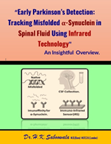
Explore the full illustrated eBook:
How to Get a Book:
Visit: https://drhakimemedivault.com
OR
Scan the “QR code” below to buy and explore over 350+ high-value medical titles.

Medical Review
This review confirms that the descriptions of α-synuclein infrared profiling and diagnostic imaging are consistent with recent peer-reviewed literature. However, the information is intended for educational awareness and should not be interpreted as clinical guidance.
(Reviewer: Dr. A. Mehta, MD, DM – Consultant Neurologist)
Thank You Note.
My sincere gratitude to readers, clinicians, and researchers who continuously advance the understanding of neurodegenerative diseases. Your commitment to innovation and compassionate care inspires every exploration shared here.
Disclaimer: The content is for educational and informational purposes only. It is not intended to replace professional medical advice, diagnosis, or treatment. Always consult a qualified healthcare professional for medical guidance.