

By Dr. H. K. Saboowala
M.B.(Bom), M.R.S.H.(London)
For Medical Professionals, Researchers and Curious Minds
What Is Popcorn Lung?
Popcorn Lung, or Bronchiolitis Obliterans, is quaint but severe lung disease that damages the smallest airways in the lungs, leading to progressive breathing difficulties.
The condition gained public attention when it was linked to diacetyl, a chemical used in butter-flavoured popcorn.
However, this disease is now recognized in many environments, including industrial exposure and e-cigarette use.
Bronchiolitis Obliterans is not cancer, but its effects can be just as serious.
It causes inflammation and scarring that blocks airflow and permanently damages the lungs.
1. Popcorn Lung Is Caused by More Than Just Popcorn
Although named after its link to workers in popcorn factories, diacetyl is not the only culprit.
The disease can result from exposure to:
- Fumes from industrial chemicals
- E-cigarette and vaping aerosols
- Respiratory infections
- Autoimmune disorders
- Chemical warfare agents (in rare cases)
2. Symptoms of Popcorn Lung Mimic Other Common Lung Disorders
The early symptoms of Popcorn Lung (Bronchiolitis Obliterans) often resemble chronic bronchitis or asthma, making it easy to miss. These include:
- Dry, persistent cough
- Shortness of breath (especially after exertion)
- Wheezing
- Fatigue
- Fever and night sweats (in some cases)
Early diagnosis is critical to managing the disease and avoiding permanent damage.
3. Diagnosis of Popcorn Lung, Involves High-Resolution Imaging & Lung Function Tests
Doctors typically rely on HRCT scans, spirometry, and sometimes lung biopsy to confirm Popcorn Lung (Bronchiolitis Obliterans).
There is no single definitive test, which makes expert evaluation essential.
4. There Is No Cure for Popcorn Lung, but Treatment Can Slow Progression
There is no known cure for popcorn lung. However, the following options may slow the disease:
- Corticosteroids to reduce inflammation
- Immunosuppressive therapy
- Oxygen therapy
- Pulmonary rehabilitation
- Avoidance of further chemical exposure
In severe cases, lung transplantation may be required.
5. Prevention of Popcorn Lung Is Key.
The best approach is prevention, especially in high-risk industries or for frequent vape users. Regulatory agencies are increasingly monitoring chemical use in flavourings and electronic inhalants.
About the Book
This blog is excerpted from the eBook:
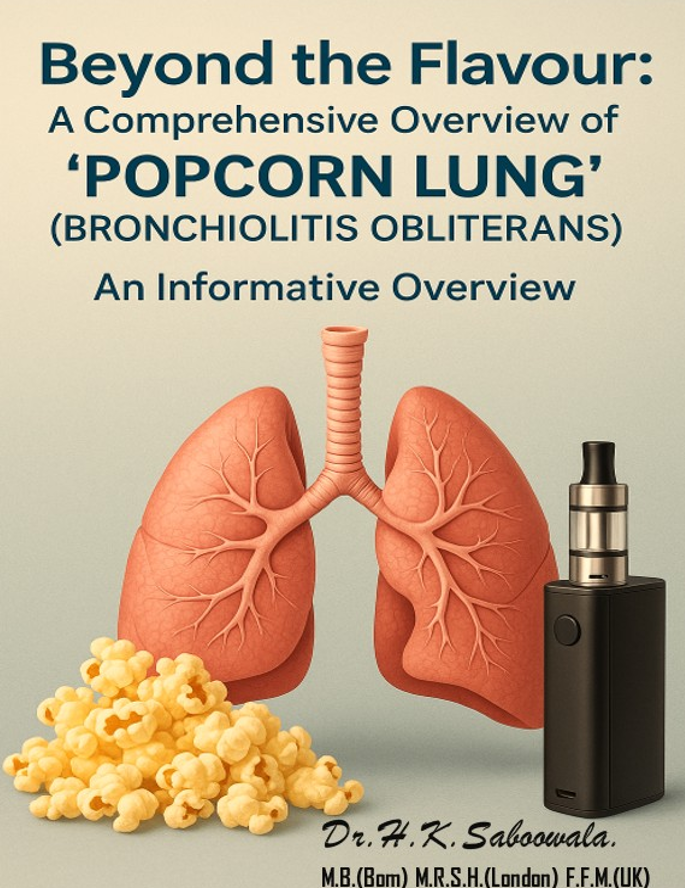
“Beyond the Flavour: A Comprehensive Overview of Popcorn Lung (Bronchiolitis Obliterans)”
Written to serve busy medicos, pulmonologists, and health educators with one-click insights, this resource explains the pathophysiology, diagnosis, treatment, and public health relevance of this under-recognized disease.
Download the full eBook to explore
Now Available at: https://drhakimemedivault.com

QR code for purchasing the TITLE and “More Books “Linking to full CATALOGUE.
5 Critical Facts About Popcorn Lung (Bronchiolitis Obliterans) – Read more here
Read my full scientific contents on Popcorn Lung (Bronchiolitis Obliterans) here:https://drhakimemedivault.com/popcorn-lung-facts/
Related Article: The Hidden Chemistry of Artificial Flavors and Your Lungs
Further Reading:
For authoritative background, visit the Centers for Disease Control and Prevention (CDC) resource on diacetyl exposure and worker safety.
Medical Review by:
Dr. A. K. Menon, MD (Pulmonology), Consultant Respiratory MedicineThis article has been medically reviewed to ensure accuracy and clarity regarding bronchiolitis obliterans, its causes, and prevention. The reviewer is an independent pulmonologist and is not affiliated with the author.
Thank-You Note
Thank you for taking the time to learn about respiratory health.
Raising awareness about preventable lung injury saves lives your interest makes a difference.
Stay informed, breathe easy, and share this knowledge to help others protect their lungs.Ethical Note
Disclaimer:
The information provided here is for general educational purposes only and should not replace professional medical advice. Always consult a qualified healthcare provider for diagnosis or treatment.