

Introduction
Anti-NMDA receptor encephalitis has emerged as one of the most important disorders redefining the boundary between psychiatry and neurology. Unlike classical neurological diseases, it often begins with subtle or acute psychiatric symptoms, leading patients to seek psychiatric care long before an organic diagnosis is considered. This unique presentation makes it a critical condition where clinical awareness directly influences patient outcomes.
One of the defining features of this disorder is its ability to closely resemble primary psychiatric conditions. Patients may present with:
- Acute psychosis
- Hallucinations and delusions
- Severe anxiety or agitation
- Behavioral disinhibition
Such symptoms can easily be misinterpreted as schizophrenia, mood disorders, or acute psychotic episodes. However, unlike primary psychiatric illnesses, these manifestations often progress rapidly and unpredictably, reflecting an underlying biological disruption rather than a purely psychiatric origin.
Red Flags of Anti-NMDA Receptor Encephalitis Clinicians Should Not Miss
Recognizing when psychiatric symptoms may have an autoimmune basis is crucial. Certain clinical features should prompt further evaluation:
- Sudden onset in previously healthy individuals
- Rapid deterioration over days to weeks
- Presence of seizures or abnormal movements
- Fluctuating levels of consciousness
- Autonomic instability (heart rate, blood pressure changes)
These warning signs indicate that the condition extends beyond psychiatric pathology and involves broader neurological dysfunction.
Synaptic Dysfunction in Anti-NMDA Receptor Encephalitis
The symptoms observed in Anti-NMDA receptor encephalitis are rooted in disturbances of synaptic signaling. NMDA receptors play a key role in cognition, memory, and behavior. When autoantibodies disrupt these receptors, the resulting dysfunction manifests as profound neuropsychiatric symptoms.
This understanding provides a critical insight:
Not all psychiatric symptoms originate from primary psychiatric disease—some are biologically reversible.
Anti-NMDA Receptor Encephalitis: From Misdiagnosis to Clinical Recognition
A major challenge in managing this condition is the delay in diagnosis caused by initial psychiatric labeling. Patients may receive antipsychotic medications without improvement, while the underlying autoimmune process continues to progress.
A shift in clinical thinking is required:
- Consider organic causes in atypical psychiatric presentations
- Re-evaluate diagnosis when symptoms evolve rapidly
- Integrate neurological assessment early
This approach transforms clinical decision-making from reactive to proactive.
Why Early Recognition Matters
Timely identification of Anti-NMDA receptor encephalitis has a profound impact on prognosis. Unlike many psychiatric disorders, this condition is potentially reversible with appropriate treatment.
Early intervention:
- Prevents disease progression
- Reduces complications
- Improves long-term neurological outcomes
Delayed diagnosis, on the other hand, may result in prolonged illness and residual deficits.
Bridging Psychiatry and Neurology
This disorder highlights the need for closer integration between psychiatry and neurology. It challenges traditional diagnostic boundaries and emphasizes the importance of a holistic, interdisciplinary approach to patient care.
Clinicians must move beyond rigid classifications and adopt a framework that considers both psychological and biological dimensions of disease.
Conclusion
Anti-NMDA receptor encephalitis represents a paradigm shift in understanding neuropsychiatric illness. Its presentation as a psychiatric disorder with an autoimmune basis underscores the importance of clinical vigilance and diagnostic flexibility.
Recognizing this condition early can dramatically alter patient outcomes, transforming a potentially severe illness into a treatable and reversible disorder. As awareness grows, it serves as a powerful reminder that psychiatric symptoms may sometimes be the first signal of underlying neurological disease.
Core Concepts and Clinical Implications
- Anti-NMDA receptor encephalitis often presents initially with psychiatric symptoms
- Rapid progression and neurological features distinguish it from primary psychiatric disorders
- Synaptic dysfunction underlies behavioral and cognitive manifestations
- Early recognition is essential for effective and reversible treatment
- Interdisciplinary collaboration improves diagnostic accuracy and patient outcomes
Access the Full Book
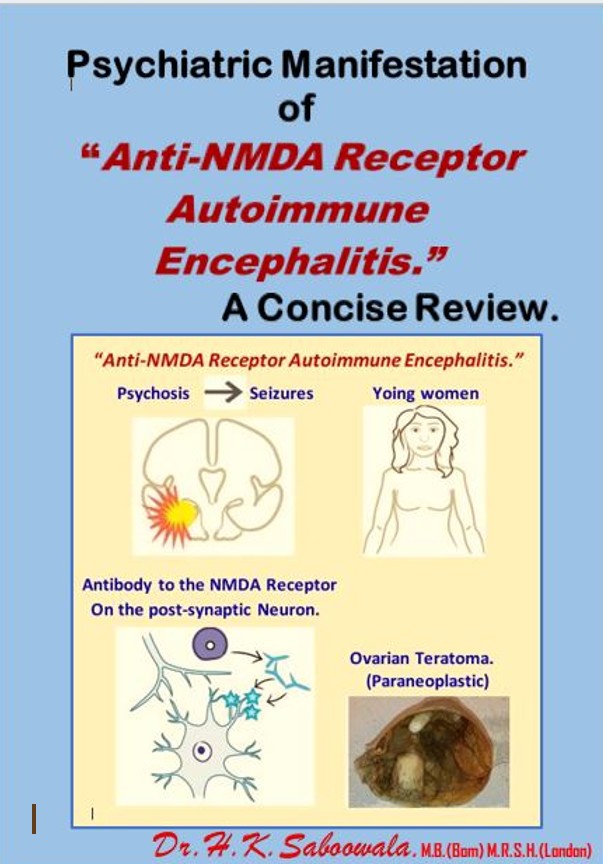
Explore the complete work: Psychiatric Manifestation of Anti-NMDA Receptor Autoimmune Encephalitis: A Concise Review for a comprehensive understanding of its pathophysiology, diagnosis, and management.
Access the full book here
https://drhakimemedivault.com/wp-content/uploads/2026/04/your-pdf-name.pdf
Further clinical details on autoimmune encephalitis are available from the National Institute of Neurological Disorders and Stroke.
Author Note
Dr. H. K. Saboowala, M.B.(Bom), M.R.S.H.(London), is an independent medical scholar with a focus on neuroimmunology, molecular medicine, and interdisciplinary clinical frameworks. His work emphasizes translating complex disease mechanisms into clinically relevant insights for healthcare professionals and researchers.
Add Your PDF Below