

Introduction
The blood GFAP biomarker has emerged as a promising tool in modern neurology, offering a non-invasive approach to detecting and monitoring central nervous system injury. Glial Fibrillary Acidic Protein (GFAP) reflects astrocytic damage and provides clinically relevant insights into neurological disease processes. With advances in highly sensitive immunoassays, the measurement of GFAP in blood is transforming diagnostic strategies beyond traditional cerebrospinal fluid-based approaches.
Why the Blood GFAP Biomarker Matters in Neurology
The development of the blood GFAP biomarker addresses key limitations in neurological diagnostics. Conventional methods such as neuroimaging and cerebrospinal fluid analysis are often invasive, costly, or not readily accessible.
Blood-based biomarkers enable:
- Rapid and repeatable assessment
- Early detection of neurological injury
- Longitudinal monitoring of disease progression
This shift is particularly valuable in acute and chronic neurological conditions where timely diagnosis is critical.
Blood GFAP Biomarker: A Marker of Astrocytic Injury
GFAP is an intermediate filament protein expressed in astrocytes, which are essential for maintaining neuronal homeostasis. Following brain or spinal cord injury, astrocytic activation leads to the release of GFAP into the bloodstream.
This biomarker therefore serves as an indicator of:
- Astrocytic damage
- Neuroinflammatory responses
- Structural disruption within the central nervous system
This biological relevance makes it a valuable marker for detecting underlying pathology.
From CSF to Blood: Expanding the Role of the Blood GFAP Biomarker
Historically, biomarkers of neurological injury were measured in cerebrospinal fluid due to its proximity to brain tissue. However, recent advances in ultra-sensitive assays have enabled accurate detection of CNS proteins in blood.
This biomarker now allows:
- Less invasive testing
- Broader clinical application
- Use in emergency and outpatient settings
This transition represents a major step toward accessible neurological diagnostics.
Clinical Applications of the Blood GFAP Biomarker
The GFAP levels in blood is being increasingly utilized across a range of neurological conditions:
- Traumatic brain injury
- Neurodegenerative disorders
- Inflammatory and demyelinating diseases
Its clinical relevance was highlighted in 2018 when regulatory authorities approved blood-based biomarker testing for mild traumatic brain injury, incorporating GFAP alongside other markers.
Integrating the Blood GFAP Biomarker with Other Markers
While valuable on its own, the GFAP levels in blood is most effective when combined with additional biomarkers such as neurofilament light chain and tau proteins.
This integrated approach helps:
- Improve diagnostic accuracy
- Differentiate types of neural injury
- Monitor disease progression more effectively
Limitations of the Blood GFAP Biomarker in Clinical Practice
Despite its advantages, the blood GFAP biomarker has certain limitations:
- Limited disease specificity
- Variability depending on timing of measurement
- Influence of systemic and non-neurological factors
These considerations highlight the importance of contextual interpretation in clinical settings.
Future Perspectives of the Blood GFAP Biomarker
The blood GFAP biomarker represents a key component of the evolving field of precision neurology. Advances in assay sensitivity and data integration are expected to enhance its clinical utility.
Future directions include:
- Integration with artificial intelligence models
- Development of standardized diagnostic thresholds
- Expansion into routine clinical practice
Conclusion
The blood GFAP biomarker is redefining the approach to neurological diagnostics by providing a non-invasive and clinically relevant measure of astrocytic injury. Its role in early detection, disease monitoring, and clinical decision-making underscores its growing importance in modern medicine.
As research continues to evolve, the blood GFAP biomarker is poised to become an essential tool in the diagnosis and management of neurological disorders.
Core Concepts and Clinical Implications
- The blood GFAP biomarker reflects astrocytic injury in the central nervous system
- It enables non-invasive detection of neurological damage
- Advances in immunoassays have expanded its clinical use
- It is most effective when combined with other biomarkers
- Clinical interpretation requires contextual and temporal consideration
- It supports the transition toward precision neurology
Access the Full Book
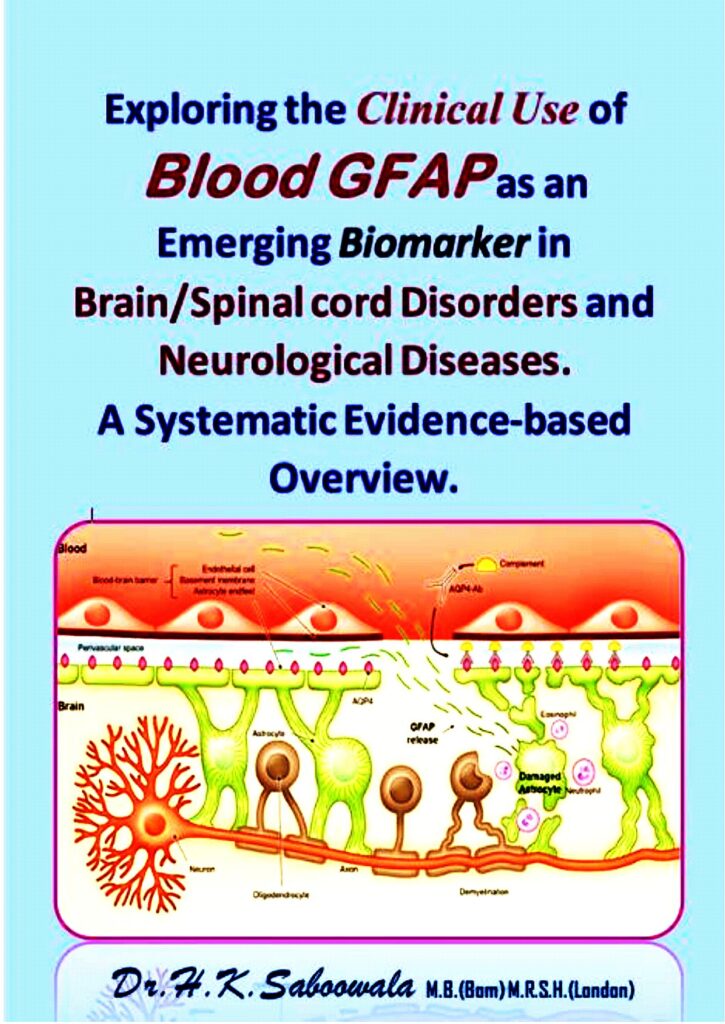
Explore the complete work: Exploring the Clinical Use of Blood GFAP as an Emerging Biomarker for a comprehensive evidence-based overview.
Access the full book here
https://drhakimemedivault.com/wp-content/uploads/2026/04/gfap-biomarker.pdf
Author Note
Dr. H. K. Saboowala, M.B.(Bom), M.R.S.H.(London), is an independent medical scholar focused on neurological biomarkers, molecular diagnostics, and translational medicine.
Further Reading:
Clinical validation of biomarkers such as GFAP has been supported by regulatory insights from the U.S. Food and Drug Administration.
U.S. Food and Drug Administration
Download Full Academic PDF: