[For medical professionals, health-science learners, and informed readers interested in evidence-based medicine]
Scholarly Identification
Scholarly synthesis underpinning this work is archived in a public research repository (Zenodo), linked to the author’s persistent ORCID record, and indexed within OpenAIRE, supporting formal attribution, discoverability, and long-term accessibility across academic indexing systems.
DOI: https://doi.org/10.5281/zenodo.18708554
ORCID iD: https://orcid.org/XXXX-XXXX-XXXX-XXXX
Introduction
Cellular aging plays a central role in how our tissues decline over time.
Understanding Cellular Aging and Senolytics is essential in today’s evolving field of longevity science.
Cellular aging is a key biological process that influences longevity and overall health.
As cells accumulate damage across a lifetime, some enter a dysfunctional state called senescence, contributing to:
- Inflammation
- Tissue decline
- Age-related diseases
Senolytics—therapies that selectively remove these senescent “zombie cells”—represent a powerful breakthrough in modern anti-aging medicine.
This concise blog, Cellular Aging and Senolytics – A Modern Scientific Overview, highlights five key insights into Cellular Aging and Senolytics, offering a simple yet authoritative overview.
1. Cellular Aging and Senolytics: A Modern Scientific Overview and Senolytics Explain Why Senescent Cells Accelerate Aging
When cells stop dividing but refuse to die, they release harmful inflammatory molecules (SASP).
This accelerates aging in nearby tissues and promotes:
- Metabolic dysfunction
- Reduced tissue repair
- Chronic inflammation
- Age-related diseases
Understanding this foundation is crucial to appreciating how Cellular Aging and Senolytics work together to improve vitality and healthspan.
2. Cellular Aging and Senolytics Reveal How “Zombie Cells” Harm the Body
Senescent cells accumulate due to:
- Oxidative stress
- DNA damage
- Toxins
- Chronic diseases
- Aging itself
Their harmful effects include:
- Impaired immunity
- Weakened muscles
- Joint degeneration
- Vascular stiffness
Clearing these dysfunctional cells can restore more youthful biological function.
3. Cellular Aging and Senolytics Show How Senolytic Therapies Work
Modern senolytic therapies aim to slow cellular aging by removing dysfunctional senescent cells.
Senolytics include:
- Drugs
- Nutraceuticals
- Natural compounds that selectively remove senescent cells while sparing healthy ones
The most studied senolytics include:
- Dasatinib + Quercetin
- Fisetin
- Navitoclax (in research settings)
By eliminating harmful senescent cells, these therapies may improve overall tissue performance.
4. Cellular Aging and Senolytics Support Organ Health and Longevity
Research suggests senolytics may help improve:
- Vascular elasticity
- Metabolism
- Cognitive clarity
- Mobility
- Skin health
This emerging field offers medically supervised strategies to improve healthspan—not just lifespan.
5. Cellular Aging and Senolytics Have a Promising Future in Anti-Aging Medicine
Lifestyle-based senolytic boosters include:
- Fasting
- Exercise
- Polyphenols
Ongoing clinical trials aim to determine:
- Safety
- Dosing
- Long-term impact
Conclusion: Cellular Aging and Senolytics Offer Hope for Better Aging
Cellular aging is a core biological process that influences longevity and overall health.
Understanding Cellular Aging and Senolytics empowers readers to appreciate the science behind healthy aging.
As research progresses, senolytic therapies may become a central strategy for:
- Maintaining vitality
- Rejuvenating tissues
- Supporting healthy aging
Explore More on:
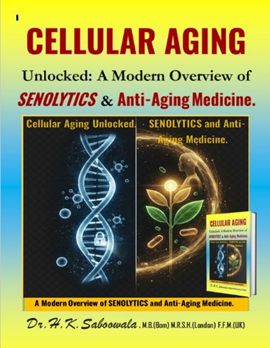
Cellular Aging Unlocked: A Modern Overview of SENOLYTICS & Anti-Aging Medicine.
by visiting my website: https://drhakimemedivault.com
OR
Scan “QR code” BELOW for “More Books “Link.

Cellular Aging and Senolytics – Read more here.
Related Reading
• Cellular Aging and the Biology of Senescence
• Senolytics and Anti-Aging Therapeutic Approaches
• Mitochondrial Dysfunction and Age-Related Diseases
• Molecular Pathways of Longevity and Healthspan
Further Reading
National Institute on Aging (NIA) — Cellular Senescence and Aging
https://www.nia.nih.gov/research/dab/biological-mechanisms-aging
Medical Review.
“Cellular Aging and Senolytics: A Modern Longevity Overview is a scientifically accurate, well-structured, and clinically relevant summary of a rapidly evolving field. The explanations of senescence biology, zombie-cell clearance, and senolytic therapies are concise yet medically sound.
The content balances scientific precision with readability, making it suitable for medicos, professionals, and curious minds alike seeking, evidence-based insights into anti-aging interventions.
This article maintains ethical medical clarity, avoids exaggerated claims, and presents senolytics within the correct scientific context.”
By Dr. R. K. Menon, M.D., D.F.M.
Consultant, Forensic & Preventive Medicine
Thank You Note:
Thank you for reading this brief overview of forensic entomology. Your interest encourages the continued creation of simple, accessible medical and scientific content for learners and curious minds alike.
Dr. H. K. Saboowala. M.B.(Bom)M.R.S.H.(London)F.F.M.(UK)
Reader Note:
This article is part of an educational series that simplifies complex scientific topics. Readers are encouraged to explore related topics through internal links to gain broader understanding.
Disclaimer:
This content is intended solely for educational and informational purposes. It does not substitute professional medical, legal, or forensic advice. All interpretations are simplified for general understanding. Readers should consult qualified specialists for expert analysis or case-specific guidance.