

Introduction to Gene Expression After Death
Gene expression after death is an emerging concept in modern medicine that challenges the traditional assumption that all biological activity ceases immediately after death. While clinical death is defined by irreversible loss of circulatory or neurological function, gene expression after death demonstrates that molecular processes may persist for a limited period in post-mortem tissues.
Post-Mortem Molecular Activity and Gene Expression After Death
post-mortem molecular activity reflects transient post-mortem molecular activity driven by:
- Residual intracellular energy reserves
- Activation of stress-response genes
- Cellular resilience mechanisms
This post-mortem gene expression does not indicate survival but represents the final regulated phase of biological function.
Molecular Mechanisms of Gene Expression After Death
Gene expression after death follows a structured and time-dependent pattern:
- Early activation of inflammatory and stress-response genes
- Gradual decline in metabolic gene activity
- Tissue-specific variability in expression profiles
These findings confirm that gene expression after death is a biologically regulated process rather than random molecular degradation.
Gene Expression After Death and Forensic Applications
Gene expression after death has important forensic implications:
- Estimation of post-mortem interval
- Identification of molecular signatures of death
- Support for molecular autopsy interpretation
Related:
Genetic Sudden Cardiac Death: A Comprehensive Molecular Autopsy Guide for Forensic and Clinical Practice
(Paste your link)
Gene Expression After Death in Molecular Autopsy and AI
Gene activity after death enhances molecular autopsy by providing dynamic insights into biological activity at the time of death.
Artificial intelligence supports:
- Pattern recognition in gene expression data
- Time-dependent modeling
- Improved forensic accuracy
Related:
AI in Molecular Autopsy: Transforming Forensic Investigation of Sudden Death
Clinical Relevance of Gene Expression After Death
Post-mortem gene expression has implications in:
- Critical care medicine
- Organ transplantation
- Cellular injury assessment
These insights improve understanding of biological irreversibility and post-mortem cellular processes.
Gene Expression After Death and Limitations
Despite advances, gene expression after death faces limitations:
- RNA degradation variability
- Environmental influences
- Lack of standardized protocols
Conclusion
Gene expression after death represents a structured continuation of molecular activity beyond clinical death. It provides valuable insights into forensic science, molecular biology, and clinical medicine while reinforcing the concept of irreversible organismal death.
Access the Book
This topic is examined in greater detail in the author’s monograph:
Gene Expression and Molecular Activity After Death: Medical Insights from Post-Mortem Cellular Persistence.
Available via the author’s official website:
https://drhakimemedivault.com
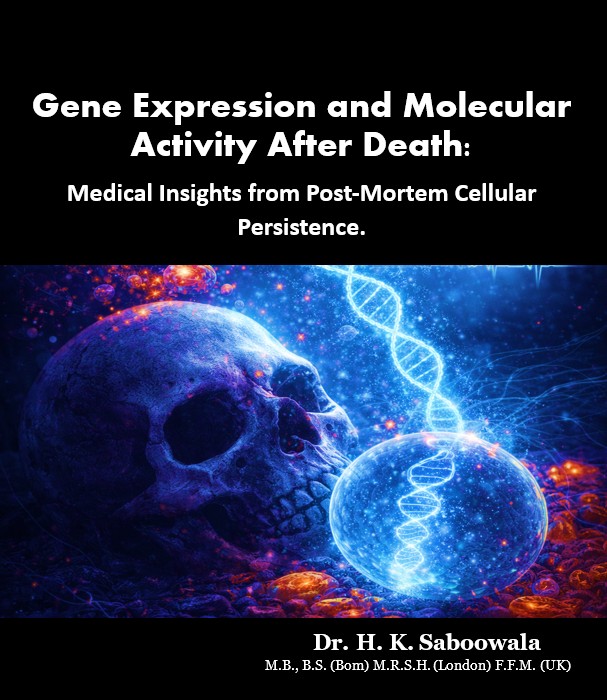
Gene Expression and Molecular Activity After Death: Medical Insights from Post-Mortem Cellular Persistence
Further Reading.
https://www.nature.com/articles/ncomms1512
https://royalsocietypublishing.org/doi/10.1098/rsob.16026
Related Reading.
- Molecular Autopsy blog
- AI in Molecular Autopsy: Transforming Forensic Investigation of Sudden Death
- https://drhakimemedivault.com/ai-in-molecular-autopsy