

[For Medical Professionals, Researchers & Curious Minds.]
Langya Virus Insights reveal that the Langya virus (LAYV) is one of the most important newly emerging zoonotic viruses identified in the past decade.
Although the total number of confirmed human cases remains small, LAYV has gained significant scientific attention because it highlights a growing pattern: silent animal-to-human spillovers that may intensify under global ecological changes.
The Langya Virus Insights show that the Langya virus (LAYV) belongs to the henipa-like group. These insights provide a modern understanding of how emerging pathogens like LAYV can remain undetected for years, emphasizing the need for vigilant surveillance, early diagnostics, and molecular research. Langya Virus Insights also help clarify how seemingly minor infections today could indicate larger future public-health challenges.
This comprehensive overview presents the latest Langya Virus Insights, breaking down the virus’s scientific identity, clinical features, transmission clues, and molecular structure. By combining visual molecular data with clear, accessible explanations, this guide offers readers a complete and modern perspective on LAYV without unnecessary complexity.
1. Scientific Identity of the Langya Virus: Langya Virus Insights
The Langya Virus Insights show that LAYV belongs to the henipa-like group, which includes some of the world’s most dangerous zoonotic viruses such as Nipah and Hendra.
While genetically related to these viruses, LAYV behaves differently:
- Its early clinical course appears milder than classical henipaviruses.
- No confirmed human-to-human transmission has been documented.
- LAYV emerged unexpectedly through routine fever surveillance, not during a major outbreak.
These factors make LAYV a scientific “Signal Virus,” demonstrating the importance of uncovering unknown pathogens circulating undetected.
Recommended reading: Forensic Entomology & Insect Evidence
2. Discovery Timeline: Langya Virus Insights & Global Health Impact
Langya Virus Insights trace the virus’s discovery to rural regions of Eastern China, where routine screening of patients with “unexplained febrile illness” revealed LAYV.
Langya Virus Insights indicate that the Langya virus (LAYV) was first detected in rural regions…
Three major breakthroughs emerged from this discovery:
- Silent spillovers can remain undetected for years.
- Enhanced molecular testing is essential for identifying rare pathogens.
- Environmental and wildlife surveillance must become a global priority.
These insights show that modern scientific vigilance, rather than large outbreaks, brought LAYV to the forefront of global health research.
3. Clinical Profile: What Langya Virus Insights Reveal About Infection
Although cases are limited, Langya Virus Insights highlight a consistent clinical pattern among infected individuals:
Most Observed Symptoms:
- Fever
- Fatigue and body weakness
- Cough and mild respiratory discomfort
- Loss of appetite
- Headache
- Thrombocytopenia in some cases
- Mild liver or kidney function changes rarely
The current clinical picture of LAYV is mild, but the true spectrum will only be understood with larger datasets. These Langya Virus Insights underscore the need for ongoing monitoring and data collection.
Recommended reading: Neuroplasticity & Aging Brain Discoveries
4. Transmission Puzzle: Langya Virus Insights on Spread & Reservoirs
One of the most critical questions is how LAYV spreads between species. Langya Virus Insights indicate:
- Shrews are the primary natural reservoir.
- Some domestic animals (goats, dogs) have shown antibodies, suggesting limited exposure.
- No verified human-to-human transmission has been documented.
Currently, LAYV is a zoonotic spillover virus, not adapted for sustained human transmission. Continuous monitoring is crucial to detect any future changes.
5. Molecular & Visual Insights: Langya Virus Insights into Structure
Modern imaging and sequencing techniques provide critical Langya Virus Insights:
- Electron microscopy and 3D modeling reveal the shape and surface proteins of LAYV.
- Molecular studies show how LAYV attaches to host cells.
- Identified viral proteins highlight potential drug or vaccine targets.
- Structural comparisons with Nipah and Hendra viruses allow predictions of viral behavior and pathogenicity.
Visual and molecular insights are central to understanding LAYV’s potential evolution and public-health impact.
6. Public-Health Importance: Langya Virus Insights for Global Awareness
Even though LAYV causes mostly mild illness, Langya Virus Insights emphasize its global relevance:
- Zoonotic spillovers are increasing worldwide.
- Unknown viruses can adapt over time.
- Cross-species transmission is unpredictable.
- Rural communities may lack access to diagnostics.
- Climate and ecological changes can increase spillover frequency.
LAYV serves as a warning model, highlighting the importance of early detection, surveillance, and global preparedness.
7. Future Research Priorities: Langya Virus Insights & Next Steps
Next steps in LAYV research, according to Langya Virus Insights, include:
- Complete genome mapping across multiple samples.
- Deep study of receptor-binding processes.
- Expanded reservoir investigations beyond shrews.
- Development of standard diagnostic assays.
- Long-term epidemiological tracking.
- Vaccine feasibility studies comparing LAYV with related viruses.
Each breakthrough strengthens scientific understanding and prepares the global community for potential future challenges.
Conclusion: Langya Virus Insights Mark a New Chapter in Zoonotic Awareness
While LAYV is not currently a major public-health threat, Langya Virus Insights reveal that silent, emerging viruses can circulate undetected. Modern diagnostics, visual molecular research, and vigilant surveillance make LAYV a key example of why early detection and global preparedness are essential.
Recommended reading: Cellular Aging & Senolytics
Want to dive deeper?
Explore the full illustrated eBook:
Front cover with caption below.
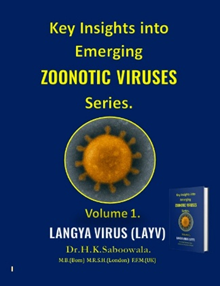
“Key Insight into Emerging ZOONOTIC VIRUSES”
Series. LANGYA VIRUS(LAYV)Volume 1.
How to Get a Book:
Visit: https://drhakimemedivault.com
3D Front Cover
Related Reading
• Langya Virus (LAYV): Clinical and Epidemiological Insights
• Emerging Zoonotic Viruses and Spillover Events
• Viral Evolution, Mutation, and Host Adaptation
• Surveillance and Early Detection of Novel Viral Pathogens
Further Reading
- World Health Organization (WHO) —
Prevention of Zoonotic Spillover - World Health Organization (WHO) — Emerging and Re-emerging Infectious Diseases
- https://www.who.int/teams/global-infectious-hazards-preparedness
Medical Review
Reviewed by: Dr. B.A. Sharma. MD, Consultant in Infectious Diseases.
This volume titled “A Modern Overview of the Langya Virus (LAYV)” has been medically reviewed for accuracy, scientific consistency, and clarity. The explanations, clinical features, and epidemiological insights presented here are in alignment with currently available peer-reviewed evidence.
Thank You Note
Thank you for taking the time to explore this scientific overview of the Langya virus (LAYV). Your interest in emerging zoonotic diseases contributes to greater public awareness and global health preparedness.
I sincerely appreciate your support for this educational series. Your engagement helps strengthen evidence-based communication in virology and infectious disease.
Dr. H. K. Saboowala
M.B.(Bom), M.R.S.H.(London), F.F.M.(UK)
Expert Compiler & Global Self-Publisher.
Reader Note
This book is designed for, clinicians, researchers, and curious minds alike who seek a clear, and accurate informative explanation of emerging zoonotic viruses.
While the content is simplified for clarity, the scientific integrity of all explanations has been carefully preserved.
Disclaimer
This book provides general scientific information for educational purposes only.
It is not intended to diagnose, treat, cure, or prevent any disease.
The content should not be used as a substitute for professional medical advice, diagnosis, or treatment.
Always seek the guidance of a qualified healthcare provider with any questions regarding a medical condition.
Data regarding emerging pathogens such as the Langya virus (LAYV) is continuously evolving; therefore, some scientific details may change as new findings become available.
The self-publisher and medical reviewer are not responsible for any consequences arising from the use or misuse of the information contained in this book.