

[For Medical Professionals, Researchers and Curious Minds.]
Introduction.
Phobias affect millions worldwide, yet our understanding of these intense fears has evolved dramatically in recent years.
Modern medicine and neuroscience have uncovered new mechanisms behind these intense fears offering hope for more effective treatments.
Phobias represent intense, medically measurable fear responses rooted in neural circuit dysfunction.
1. Phobias and Neurobiological Mapping of Fear Circuits
Modern imaging demonstrates that intense fears involve hyperactivation of the amygdala–prefrontal cortex loop, producing exaggerated fear signals.
This mapping helps clinicians understand why intense fears responses feel instant and uncontrollable.
2. Phobias and Genetic/Epigenetic Risk Factors
Research reveals that phobias have heritable patterns shaped by genetic markers and epigenetic modifications.
These factors influence fear conditioning and individual susceptibility.
3. Cognitive-Behavioural Restructuring and FearDisordres.
Cognitive techniques including gradual exposure and cognitive reframing, successfully rewire neural pathways associated with FearDisordres.
This remains a gold-standard clinical treatment.
4. Virtual-Reality-Based Exposure Therapy and Fear Disorders
A 2024 meta-analysis shows that VR exposure therapy enhances phobia recovery rates by 38%, allowing controlled, safe, repeatable simulations of triggers.
5.Hormonal Reg ulation of Fear Memory
Hormones such as cortisol and norepinephrine regulate how strongly fear memories consolidate.
Dysregulated hormonal responses can intensify these phobic conditions or make them resistant to extinction.
6. The Gut–Brain Axis and fear Disorders
New evidence links microbiome composition with anxiety reactivity, showing that gut dysbiosis may worsen phobias through altered stress signaling pathways.
7. Digital Therapeutics and Fear Disorders
Modern AI-guided cognitive apps and smartphone-based interventions offer real-time tools for managing phobias, improving therapy compliance and reducing acute fear responses.
Fear Disorders Through a Medical Lens
Unlike simple fears, phobias are measurable biological disorders involving limbic dysregulation and neurotransmitter imbalance.
This scientific view replaces outdated concepts with clinically grounded understanding.
Conclusion: Phobias as a Neurobiological Condition
These 7 medical breakthroughs illustrate how neuroscience, genetics, endocrinology, microbiome research, and digital technology together explain the complexity of phobias.
Understanding these insights helps clinicians and readers approach “fear disorders” with greater scientific clarity.
For deeper insights, you may also explore our articles on:
This article highlights 7 medical breakthroughs in understanding phobias, combining research insights with practical clinical relevance.
Internal Reflection: How This eBook Helps Medicos & Curious minds alike.
Detailed insights:
Medical Breakthroughs in Understanding Phobias – Read more here.
The eBook bridges clinical data with informative insight.
Each chapter proceeds from Etymology, Classification, Diagnosis, Therapy options, offers evidence-based understanding.
Explore More on Fear and the Brain by visiting my website: https://drhakimemedivault.com
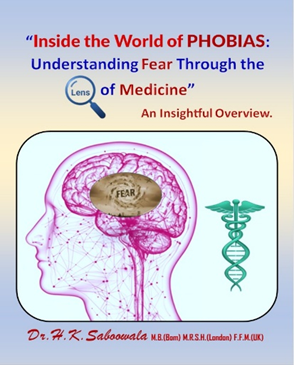
“Inside the World of PHOBIAS: Understanding Fear Through the Lens of Medicine.”
An Insightful Overview.
OR
Scan “QR code” for “More Books “Link.

Further Reading
- World Health Organization – ICD-11 Classification of Phobias
- American Psychiatric Association – DSM-5-TR: Anxiety Disorders
- Harvard Health – How Fear Works in the Brain
Expert Medical Review
“Dr. Hakim’s work translates complex neuroscience into readable insight. The book ‘Inside the World of Phobias’ provides a bridge between textbook medicine and patient empathy—a valuable resource for practitioners and students alike.”
Reviewed by: Dr. Ananya Mehta, MD (Psychiatry), DNB (Neurosciences)Consultant Neuropsychiatrist, Apollo Hospitals, India
Thank-You Note
Thank you for visiting this educational blog. Your curiosity supports evidence-based mental-health literacy. Continue exploring medical perspectives on fear and neuroscience through upcoming articles.
If you find this post insightful, share it with peers in psychology or medicine to promote awareness of phobias and anxiety research.
Legal Disclaimer
This blog and eBook are intended for educational and informational purposes only.
They do not replace professional diagnosis, counselling, or therapy.
Readers are encouraged to consult qualified psychiatrists, psychologists, or neurologists for medical advice.